What Is the Purpose of My AC Return Air Vent?
Your AC return vent is the big grille that pulls air OUT of the room and back to the air handler. It maintains pressure, filters out dust before the air gets cooled and recirculated, and keeps your equipment efficient. Block it and you raise your electric bill, shorten the life of your AC, and make your home harder to cool - especially in Gainesville's humidity.
AC Not Cooling Evenly?
Hot rooms, high bills, or whistling vents often trace back to airflow and return-side problems. We can diagnose and fix airflow issues across your whole house.
Family-owned since 1998 • American Standard Dealer



Operated Since 1998
Emergency Service
A central AC works as a closed loop: cooled air gets blown into the rooms through the small ceiling or wall vents (supply vents), and the warm humid air gets pulled back to the air handler through the big grille (the return vent). Without the return side working properly, the supply side cannot keep up. Here is exactly why the return vent matters and what to avoid.
What a Return Air Vent Actually Does
An air conditioner does not create cold air out of thin air. It pulls the warm humid air from your home, runs it across a cold evaporator coil to remove heat and moisture, and pushes the now-cool dehumidified air back into the rooms. The supply ducts carry cool air OUT to the rooms. The return ducts carry warm air BACK to the air handler so the cycle can repeat. Cut off the return side and the supply side starves - the AC keeps running but produces less and less cooling because there is nothing left to cool.
3 Ways Return Vents Benefit Your Home
1. They Maintain Air Pressure Balance
Think of your HVAC system as a recirculating pump. Every cubic foot of air the supply ducts blow into the room has to be replaced by a cubic foot pulled out through the return. If returns are blocked or undersized, the pressure inside the room rises (positive pressure), the air handler has to work harder to push more air against the resistance, and the cooling becomes uneven room to room. In leaky homes, the imbalance also pulls hot humid outside air in through gaps around windows, doors, and recessed lights - which is the worst possible thing to do in a Florida summer.
2. They Filter Out Dust, Pollen, and Pet Dander
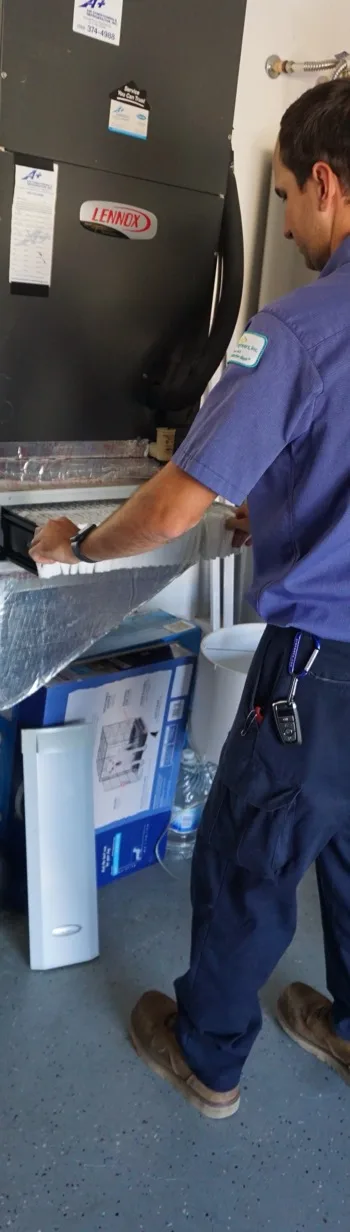
Almost all residential return vents have a filter slot. The filter sits at the return so it can grab dust, pollen, pet dander, and allergens before that air reaches the evaporator coil. A clean filter protects the coil from gunking up (which kills efficiency), keeps your indoor air cleaner, and reduces the dust you have to wipe off your furniture. Skip the filter changes and the coil starts catching what the filter would have caught - and coil cleaning is a service call, not a five-dollar swap.
3. They Help Your Bills Stay Lower
Proper return airflow lets the AC reach the setpoint faster and shut off sooner. Restricted returns make the AC run longer cycles to do the same work, which directly raises your electric bill - the same long-runtime problem you get from a poor thermostat strategy, which we cover in our guide on whether turning the AC off while you are out actually saves money. In sealed, properly-ducted homes this is invisible. In homes with kinked flex duct, undersized returns, or partially-blocked filter slots, the cost difference can be significant month over month.
Should I Ever Close or Block a Return Vent?
No. There are two common reasons homeowners try this, and both backfire:
Reason 1: "I want to cool one room faster, so I will close the other vents." The AC has no sensor that detects closed vents. It keeps pushing the same volume of air no matter what. With supply vents closed, the static pressure in the ducts spikes, which can:
- Force air through duct seams and joints (now you are cooling your attic or crawlspace, not your home)
- Stress the blower motor and shorten its life
- Freeze the evaporator coil because airflow across it dropped too low
Reason 2: "The room with the return vent feels cold, so I will cover it." Covering a return is even worse than closing a supply. It cuts the airflow the AC depends on, and the system will short-cycle, run longer, dehumidify less, and eventually freeze up.
Furniture in Front of Returns: Also a No
You do not have to consciously close a vent to block it - a couch, a bed, a bookshelf, or a tall houseplant in front of the return does the same thing. In a humid Florida environment, upholstered furniture pressed against a return can also collect moisture and grow mold over time. Starving the return of airflow can also freeze the evaporator coil, which is one of the causes of water dripping from your AC vents. Leave 12 to 18 inches of clearance in front of every return vent.
Frequently Asked Questions
Airflow Problems in Your Gainesville Home? Call A+ Air Conditioning and Refrigeration
Uneven cooling, high bills, whistling vents, and rooms that never quite get to setpoint are almost always airflow problems on the return side. A+ Air Conditioning and Refrigeration can measure static pressure, evaluate your duct sizing, check for leaks, and recommend the right fix - which is often much cheaper than replacing the whole system. We service Gainesville, Alachua, Ocala, Bronson, Chiefland, Palatka, Cedar Key, Trenton, Starke, High Springs, Waldo, and the surrounding North Central Florida area.
The A+ Difference: Your Local Comfort Team
Here's what we believe: every homeowner in Gainesville, FL deserves an HVAC company that shows up on time, tells you the truth, does the job right, and charges a fair price. That's been our promise since we opened our doors in 1998, and it's the reason families across North Central Florida keep coming back and recommending us to their neighbors.
We're a family-owned and locally operated business, not a franchise, not a corporation. When you call A+ Air Conditioning and Refrigeration, you're calling people who live and work right here in your community. Our technicians are trained, licensed, and experienced with American Standard equipment, and we take real pride in the work we do.