Why Is Water Dripping From My AC Vent in the Ceiling?
Water dripping out of a ceiling AC vent is almost always one of five things: a clogged condensate drain line, a rusted-through drain pan, a failed condensate pump, low refrigerant freezing the coil, or a clogged air filter doing the same. Here is how to tell them apart, and a 6-step DIY fix for the most common cause.
Active Leak Right Now?
Turn the AC off at the thermostat to stop the water, then call us. We can clear, repair, and inspect the rest of the system the same day in most cases.
Family-owned since 1998 • American Standard Dealer



Operated Since 1998
Emergency Service
Seeing water drip out of a ceiling AC vent is alarming, and for good reason - left alone, even a slow drip leads to drywall damage, ceiling stains, and mold growth in days, not weeks. The good news is that the cause is almost always one of five things, and the most common one is a DIY fix.
Stop the water first: turn the AC off at the thermostat. That keeps the evaporator coil from making more condensation while you diagnose the leak.
How an AC Makes Water in the First Place
Your AC works by pulling warm humid Gainesville air across a cold evaporator coil. Water vapor in the air condenses on the coil (the same way water beads up on a cold drink), drips into a drain pan beneath the coil, and flows out of the house through a PVC condensate drain line. In peak summer, a typical residential system pulls 5 to 20 gallons of water out of the air per day. If anything interrupts the path from coil to outside, that water has to go somewhere - usually your ceiling.
5 Causes of Water Dripping From AC Vents
1. Clogged Condensate Drain Line (Most Common)
The drain pipe is a dark, damp environment - perfect for mold, algae, and biofilm. Over a season or two, that buildup narrows the pipe until water cannot pass. The drain pan fills, then overflows into the secondary drain (which usually exits over a window or door) or directly into the ceiling. About 8 out of 10 ceiling-vent leaks we see in Gainesville trace back to this.
What to do: Follow our 6-step DIY fix below.
2. Rusted or Cracked Drain Pan
The drain pan sits directly under the evaporator coil and stays wet whenever the AC runs. In Florida humidity, older galvanized-steel pans can rust through over 10 to 15 years. Once the pan has a pinhole or crack, water drips around the drain line rather than into it.
What to do: This needs a professional. The pan is under the coil and a replacement usually means partially disassembling the air handler. Schedule a service call.
3. Failed Condensate Pump
If your air handler is in a basement, crawl space, or any location below the level of the outdoor drain termination, gravity is not enough - a small electric condensate pump moves the water up and out. When the pump motor fails, condensate backs up in the reservoir and overflows.
What to do: A failed pump is a quick swap for a technician. Open the pump housing (often a small plastic box next to the air handler), see if it is full of water that is not pumping, and call us. A homeowner can attempt this, but pumps need to be wired correctly and tied into the AC safety circuit.
4. Refrigerant Leak Freezing the Coil
If the refrigerant charge in your AC drops below spec (almost always because of a leak), the evaporator coil gets too cold and develops a layer of ice. When the AC shuts off, the ice melts all at once - more water than the drain pan was designed to hold - and it overflows. Tell-tale signs: poor cooling for the past few weeks, frost visible on the copper line outside, or a hissing sound from the unit.
What to do: Refrigerant work is licensed-only and refrigerant leaks need to be sealed (not just topped off, which is the same as filling a leaky tire). Schedule a service call. The recent industry switch to lower-GWP refrigerants makes this especially important to get right.
5. Dirty Air Filter
This is the easiest one to prevent. A clogged filter starves the evaporator coil of airflow, the coil gets too cold, freezes, and then melts all at once - same problem as the refrigerant leak above, with a much simpler cause. A blocked return grille does the same thing, which is one reason it matters to understand the purpose of your AC return air vent and keep it clear.
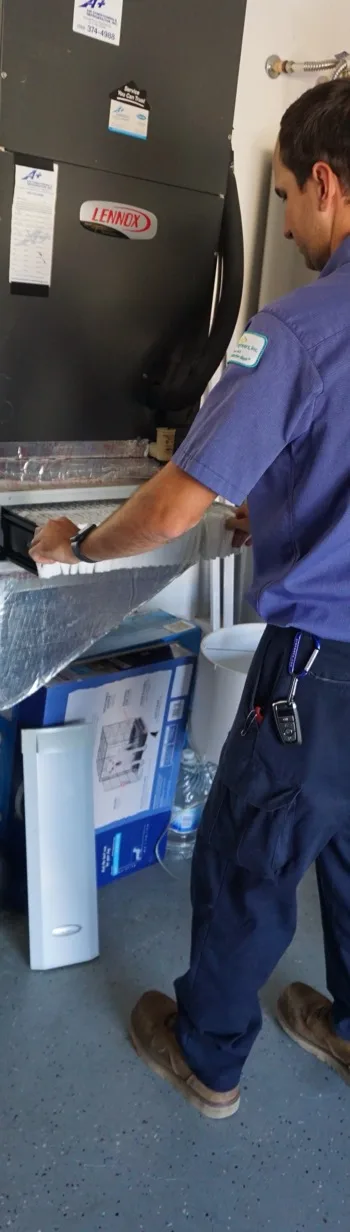
What to do: Replace the filter (right now, before reading the rest of this page). Standard 1-inch pleated filters should be changed every 60 to 90 days; more often if you have pets, smokers, or run windows-open during pollen season.
DIY Fix: How to Clear a Clogged Condensate Drain Line in 6 Steps
If you suspect the most common cause - a clogged drain line - here is the same procedure a technician would run.
Stops new condensate from forming and isolates the air handler electrically.
Use a wet/dry shop vac, or sponge it out into a bucket. The pan needs to be empty before you can clear the line behind it.
Find where the PVC drain exits your house (near the outdoor condenser) and check the open end for spider webs, dirt daubers, or yard debris. Trim back any vegetation within a foot of the opening.
Attach a wet/dry shop vac hose to the outside drain termination, seal the gap with a rag, and run the vac for 60 to 90 seconds. This usually pulls the entire clog out the open end.
Find the indoor cleanout (a T-shaped vent tee with a removable cap, just past the air handler) and pour 1/4 cup of distilled white vinegar in. Let it sit 30 minutes, then chase it with a cup of clean water. Full step-by-step in our drain line vinegar guide.
Cap the cleanout, flip the breaker back on, set the thermostat to cool, and watch the drain pan for the next 30 minutes. If water collects but flows out the line, you are done. If it does not flow, the clog is past where you can reach - call us.
How to Prevent the Next Leak
Most ceiling-vent leaks are preventable with two cheap habits: change your air filter every 60 to 90 days, and pour a quarter cup of distilled white vinegar down the drain cleanout once a month during cooling season. Both take five minutes. Schedule an annual AC tune-up on top of that and the equipment will last years longer.
Frequently Asked Questions
Call A+ Air Conditioning and Refrigeration If You Cannot Clear It
If the DIY fix does not get water flowing out the drain line, the leak is coming from somewhere other than the line, or you would rather have a professional inspect the whole system, we can help. A+ Air Conditioning and Refrigeration has been keeping Gainesville homes dry and cool since 1998.
The A+ Difference: Your Local Comfort Team
Here's what we believe: every homeowner in Gainesville, FL deserves an HVAC company that shows up on time, tells you the truth, does the job right, and charges a fair price. That's been our promise since we opened our doors in 1998, and it's the reason families across North Central Florida keep coming back and recommending us to their neighbors.
We're a family-owned and locally operated business, not a franchise, not a corporation. When you call A+ Air Conditioning and Refrigeration, you're calling people who live and work right here in your community. Our technicians are trained, licensed, and experienced with American Standard equipment, and we take real pride in the work we do.