Why Is My AC Not Blowing Cold Air? 9 Causes & Fixes
It is a July afternoon in Gainesville, the house is climbing past 80 degrees, and the air coming from your vents is anything but cold. Before you sweat through another evening, work through this checklist. It starts with the simple fixes you can try yourself and moves to the causes that need a professional, so you know exactly what is happening with your system.
Need AC Repair in Gainesville?
If your system runs but will not cool, our technicians can diagnose it fast and get you comfortable again.
Family-owned since 1998 • Same-day service



Operated Since 1998
Emergency Service
An air conditioner that runs but blows warm or room-temperature air is one of the most common calls we get during a Florida summer. The good news is that several causes are simple to check yourself, and even the ones that require a technician are easier to explain once you know what to look for. Here are the quick checks to try first, followed by the nine reasons an AC stops blowing cold air.
Quick Checks Before You Call
Run through these seven checks in order. About half the "no cold air" problems we see are solved somewhere in this list, and the rest tell you it is time to bring in a professional. Turn the system off before working around the outdoor unit.
Confirm the thermostat is set to "cool" and the fan to "auto," and lower the setpoint a few degrees. Fan set to "on" blows room-temperature air and is often mistaken for an AC failure.
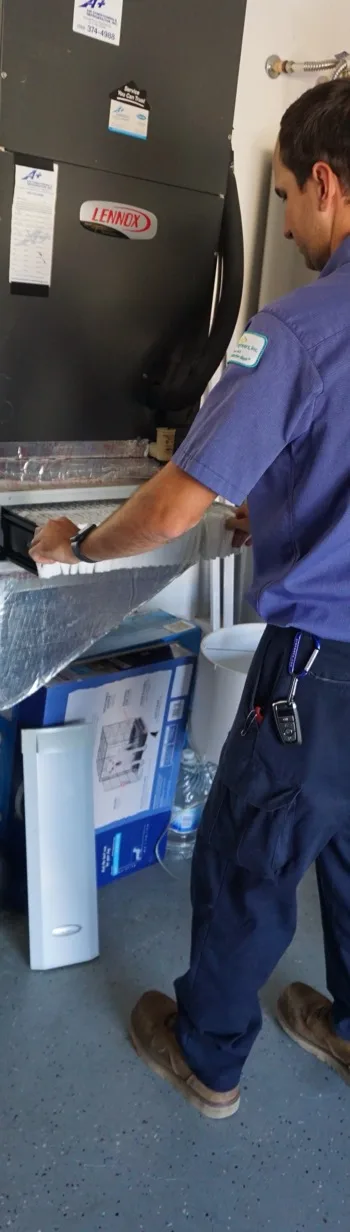
A clogged filter is the most common cause of weak or warm airflow. Remove the filter; if you can't see light through it, install a fresh one of the same size with the arrow pointing toward the blower.
Locate the AC breakers in your electrical panel. If one is tripped, switch it fully off and back on. If it trips again immediately, stop and call a technician, that signals an electrical fault.
Turn off power to the outdoor unit and remove leaves, grass clippings, and dirt from the condenser fins. Keep at least two feet of clearance so the unit can release heat properly.
If you see ice on the indoor coil or refrigerant lines, turn the system off and let it fully thaw for a few hours. Running a frozen system can damage the compressor.
A clogged condensate drain can trigger a safety switch that shuts cooling off. Clear the drain line and check that the pan isn't overflowing before restarting the system.
If the system still won't cool, the issue is likely low refrigerant, a failed capacitor, or a bad compressor, all of which require an EPA-certified technician. Contact A+ Air for a professional diagnosis.
9 Reasons Your AC Isn't Blowing Cold Air
When the quick checks don't restore cooling, one of these nine issues is almost always the reason. Some you can address yourself; others involve refrigerant or electrical components that only a licensed technician should handle.
1. Thermostat settings
The simplest cause is also the most overlooked. A thermostat bumped to "heat," a fan left on "on" instead of "auto," dead batteries, or a schedule that raised the setpoint will all leave you feeling warm air. Set the mode to "cool," the fan to "auto," and the temperature a few degrees below the room. If a battery-powered thermostat has a blank screen, fresh batteries often bring the whole system back. Our guide on a blank thermostat screen walks through the fixes in order.
2. Clogged air filter
A dirty filter is the number-one airflow killer. As it clogs, less air moves across the evaporator coil, so the air that does reach your vents feels weak and warm, and the coil can eventually freeze. Pull the filter and hold it up to a light. If light doesn't pass through, replace it with the same size, arrow pointing toward the air handler. In a dusty or pet-filled Gainesville home, one-inch filters may need changing every 30 days during heavy cooling months.
3. Frozen evaporator coil
The evaporator coil inside your air handler absorbs heat from indoor air. When airflow drops or refrigerant runs low, the coil gets so cold that condensation freezes into a block of ice, and ice cannot absorb heat, so cooling stops. You may see frost on the refrigerant lines or water pooling as it thaws. Turn the system off and let the coil thaw completely, then replace the filter. If it freezes again, you have an airflow or refrigerant problem that needs a technician.
4. Dirty condenser coil
The outdoor condenser releases the heat your system pulls from the house. When its fins are packed with grass clippings, pollen, and dirt, the unit can't shed that heat, and your indoor air never gets cold. With power off, gently rinse the fins from the inside out with a garden hose and clear at least two feet of space around the cabinet. In our climate, where condensers run for months at a time, a yearly professional cleaning keeps this from becoming a recurring problem.
5. Low or leaking refrigerant
Refrigerant is the fluid that actually moves heat out of your home, and your system is a sealed loop that should never lose it. If it runs low, the cause is a leak, not normal use. Signs include weak cooling, a hissing sound, ice on the lines, and rising energy bills. Handling refrigerant requires EPA certification by law, so this is strictly a pro repair. A technician finds and seals the leak, then recharges the system to the manufacturer's specification. If your system runs R-410A, it can still be legally serviced and recharged - our guide to the new refrigerant rules covers what the phase-down does and does not mean for you.
6. Tripped breaker or electrical fault
Many split systems run the indoor and outdoor units on separate breakers. If only the outdoor unit loses power, the indoor blower keeps pushing air that never gets cooled. Check your panel and reset a tripped breaker once. If it trips again right away, don't keep resetting it, that is a warning sign of a shorted wire, a failing component, or an overloaded circuit that a technician should inspect before anything is damaged.
7. Failing capacitor
Capacitors are small cylinders that give the compressor and fan motors the jolt they need to start and keep running. Florida heat is hard on them, and they are a frequent summer failure. A telltale sign is a humming outdoor unit whose fan won't spin, or a system that starts and stops. A capacitor is an affordable, common repair, but it stores an electrical charge even with the power off, so replacement should be left to a trained technician for safety.
8. Failing compressor
The compressor is the heart of the system, pumping refrigerant through the loop. When it fails, the system may run without producing any cold air, trip breakers, or make loud clunking or clicking noises. Compressor replacement is the most expensive AC repair, so it is a real decision point: on a newer unit under warranty it is usually worth fixing, but on an aging system that money is often better applied toward a new, high-efficiency replacement.
9. Leaky or disconnected ductwork
Sometimes the system is making cold air, but it never reaches your rooms. Ducts that run through hot attics can develop leaks, gaps, or a fully disconnected section at a joint or plenum, dumping conditioned air into unused space while pulling in hot attic air. The symptoms are uneven cooling, weak airflow at some vents, and a system that runs constantly. A technician can pressure-test and seal the ductwork to restore the cooling you are already paying to produce.
DIY vs. When to Call a Pro
Knowing where the safe line is saves you time and protects your equipment. The checks you can confidently do yourself are the low-risk ones: setting the thermostat to "cool" and "auto," changing a dirty filter, resetting a tripped breaker once, rinsing the outdoor condenser, and letting a frozen coil thaw. These solve a large share of "no cold air" calls and cost you nothing but a few minutes.
Everything involving refrigerant, electrical components, the capacitor, the compressor, or sealed ductwork belongs to a licensed professional, both for your safety and because refrigerant work legally requires EPA certification. If you've worked through the quick checks and your home still won't cool, don't run a struggling system and risk a bigger failure. A+ Air offers same-day AC repair in Gainesville during our business hours, with an upfront diagnosis before any work begins.
Preventing "No Cold Air" Problems
Most no-cooling breakdowns trace back to skipped maintenance: a neglected filter that freezes a coil, a dirty condenser that overheats, or a weak capacitor that could have been caught early. The two habits that prevent the most trouble are changing your filter on schedule and having the system professionally serviced before each cooling season. Our guide on how often to change your AC filter covers the timing for your setup.
A seasonal tune-up cleans the coils, checks refrigerant levels, tightens electrical connections, and flags parts that are wearing out before they strand you on the hottest day of the year. A+ Air's Comfort Club maintenance plan bundles two visits a year with priority scheduling, keeping your system efficient and protecting your warranty.
Frequently Asked Questions
Still No Cold Air? A+ Air Can Help
If you've worked through the checklist and your home still won't cool, we can take it from here. A+ Air Conditioning and Refrigeration has kept North Central Florida comfortable since 1998, and our technicians diagnose no-cooling calls the same day during our business hours. For related help, see our guide to water dripping from air vents, or browse more troubleshooting tips on our blog.
The A+ Difference: Your Local Comfort Team
Here's what we believe: every homeowner in Gainesville, FL deserves an HVAC company that shows up on time, tells you the truth, does the job right, and charges a fair price. That's been our promise since we opened our doors in 1998, and it's the reason families across North Central Florida keep coming back and recommending us to their neighbors.
We're a family-owned and locally operated business, not a franchise, not a corporation. When you call A+ Air Conditioning and Refrigeration, you're calling people who live and work right here in your community. Our technicians are trained, licensed, and experienced with American Standard equipment, and we take real pride in the work we do.